


Why do so many software implementations in presentation management fail, even though the advantages are obvious?
Sales and marketing managers ask themselves this question time and again – especially when the new presentation software is hardly used after a few months. The solution is obvious: without professional change management, the full potential of a modern content hub remains unattainable. In this blog post, we shed light on why change management is crucial for presentation management tools in particular, what corporate culture is required for this and how sales teams need to be set up optimally in order to achieve a high usage rate. We also highlight the benefits of successful implementation and the risks of neglecting it.
Why is change management so often neglected in companies?
Change management– the targeted control of change processes – is an underestimated topic in many companies, especially when it comes to the introduction of new software in presentation management. But why is change so difficult?
Lack of awareness of the need for change

Many managers assume that new tools such as an intelligent content hub will be accepted and used automatically. The reality is different: People are creatures of habit. They prefer to stick with the tried and tested, even if the new system is objectively better. Particularly in sales and marketing, where time pressure and targets determine the daily routine, familiarization with new software often seems like an additional burden.
Lack of resources and time

Change management means effort: communication, training, feedback rounds, adaptation of processes. Companies often underestimate how much time and resources a successful introduction actually requires. Change management quickly becomes a minor matter, as “day-to-day business calls”. As a result, acceptance of the new presentation management software remains low.
Fear of losing control

Another point: the introduction of a central content hub takes away some of the autonomy that employees are used to. Especially in sales, where many team members maintain their own presentation templates, centralization is often perceived as a loss of control. Without targeted change management, resistance arises that hinders the use of the new solution.

Lack of performance measurement
There is often a lack of clear key figures and targets for software implementation. Without measurable success, the benefits of change management remain invisible and are quickly neglected.
What kind of corporate culture does successful change management need?
The introduction of a new presentation management tool is much more than an IT project – it is a cultural change. But which corporate culture promotes this change?
Openness and willingness to learn
Companies that welcome change and see mistakes as learning opportunities create the best conditions for successful change management. Transparent communication – about the benefits of a content hub, for example – allays fears and promotes acceptance.
Leadership as a role model
Managers in sales and marketing must set a good example. They should not only endorse the new presentation management software, but actively use it themselves. This is the only way to send the signal: “This change is important and is supported from the top.”
Participation and co-design
Change management is successful when employees are involved in the process. This means obtaining feedback, taking suggestions for improvement seriously and seeing the introduction of the new solution as a joint project. This creates identification – and the usage rate increases.
Transparency and appreciation
Open communication about goals, challenges and successes is essential. Clearly communicating the added value of a central content hub for sales and marketing creates acceptance and motivation. Appreciation for the willingness to change also promotes commitment.
How do sales teams need to be set up to achieve a 90% utilization rate for sales enablement tools?
The introduction of a sales enablement tool – such as an intelligent content hub – will only be successful if it is used consistently. But how do you achieve a usage rate of 90%, for example?

Clear responsibilities and roles
Sales teams need clear structures: Who is responsible for presentation management? Who maintains and updates content in the content hub? Defined roles provide an overview and prevent uncontrolled growth.

Continuous training and support
A high usage rate can only be achieved through regular training and active support. Onboarding processes, short tutorials and contact persons within the company lower the barriers to entry. Especially in sales, where time is money, tools must be intuitive to use and help must be available at all times.
Integration into everyday working life

The Content Hub combines all processes centrally on one platform. Content can be created, commented on, reviewed and approved directly – without any external tools or emails. Thanks to integrated comment, feedback and review functions, the exchange between teams is significantly simplified and collaboration is made more efficient.
Incentives and performance measurement

Transparent KPIs and regular reporting make successes visible. Teams that achieve a high usage rate can be specifically rewarded and presented as best practice. Studies show: Sales teams that use sales enablement tools over 90% generate up to 25% more sales than teams with a usage rate of only 50% (source: CSO Insights, 2020).
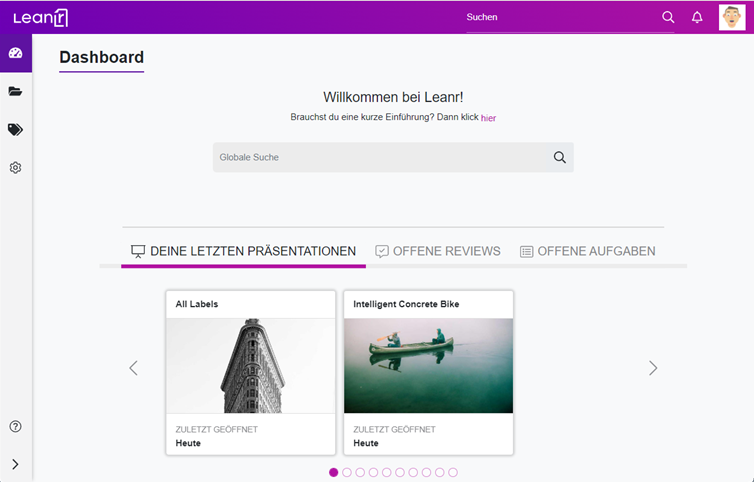
Practical example: Leanr Content Hub
With its intelligent content hub for document management, Leanr has shown numerous customers how sales and marketing can benefit together from a central platform.
With our implementation team, we also offer the option of setting up / structuring customer environments according to one-off checklist questions and filling them with customer content based on their use cases and responsibilities / roles, so that no time is wasted on the customer side.
Targeted change management, individual training and the involvement of the teams in the implementation process resulted in a usage rate of over 90%. The result: standardized presentations, faster response times and measurably more deals. You can read more success stories here.
We are also happy to work with our customers to define KPIs such as time savings, frequency of use, etc. to measure success precisely.
Advantages of successful implementation and risks if neglected
The introduction of a modern presentation management system offers enormous potential – provided that the change management is right.
Advantages of successful change management
- Greater efficiency: Sales and marketing save valuable time when searching for up-to-date content. The Content Hub provides all materials centrally and up-to-date.
- Consistency and brand strength: Consistent presentations in terms of content and CI result in maximum impact, strengthen the brand image and ensure a professional public image.
- Efficient, faster collaboration: Central administration in the Content Hub and targeted task management based on successful project management standards drastically reduce the time required for new documents, adaptations and extensions.
- Consistency: All documents that leave the company are always up-to-date and compliant thanks to an interlinking with clear usage guidelines.
- Motivated employees: Successful change management promotes identification with the company and increases satisfaction within the team.
Disadvantages of neglecting change management
- Low acceptance: Without targeted measures, the use of the new software in presentation management falls far short of expectations.
- Uncontrolled growth and inconsistencies: Different presentation templates and outdated content weaken the brand image and lead to errors.
- Loss of time and efficiency: Searching for content costs a lot of time – and therefore money.
- Demotivation: Employees feel overwhelmed or left alone and reject new tools.
- Competitive disadvantages: Companies that neglect change management lose innovative strength and miss out on market opportunities.
Advantages and Disadvantages of Successful Change Management
Conclusion: Change management as the key to success in presentation management
“Transformation is happening. It is as much cultural as it is digital. And you can’t be successful if you don’t tackle both.” – CEO of McGraw Hill
The introduction of new software in presentation management – such as a modern content hub – is much more than a technical project. It is a cultural change that requires professional support, especially in sales and marketing. Change management ensures that tools are not only introduced, but also lived. Openness, participation, clear structures and continuous communication are the basis for a high level of acceptance and use. Companies that follow this path secure decisive competitive advantages.
Leanr supports sales and marketing with an intelligent content hub that is specially tailored to the needs of modern teams. Targeted change management and practical support ensure sustainable transformation – and your presentation management becomes a real success factor.