

The hidden time trap in sales
You know the problem: your sales team spends more time searching for up-to-date presentations than talking to customers. Product data sheets are out of date, case studies can’t be found and every employee uses their own version of the company presentation. What begins as a minor organizational problem quickly develops into a massive obstacle for your sales management.
A recent study by the Aberdeen Group Research Institute (2022) shows the dramatic effects: Sales representatives spend an average of 30% of their working time searching for relevant content and creating or customizing presentations – time that cannot be used for direct customer contact. Even more alarming: 65% of marketing materials created are never used by sales, resulting in millions lost each year or leaving the company as outdated information.
These figures illustrate a fundamental problem in sales management: the gap between marketing content and its effective use in sales. An intelligent content hub can close this gap and significantly increase the efficiency of sales processes.
The challenges of modern sales teams
Before we dive into the solutions, it is worth taking a closer look at the current challenges in sales:
Fragmented content and difficult accessibility
Sales employees spend valuable time searching for the latest presentations, product data sheets or case studies. Often this content is scattered across different platforms, drives or email inboxes. This fragmentation not only makes access difficult, but also leads to versioning issues and inconsistent customer communications.
Lack of adaptability of presentations
Standardized presentations are rarely a perfect fit for specific customer needs. However, adapting presentations is time-consuming and often leads to corporate design violations or, even more seriously, to errors in content. Efficient sales management must therefore strike a balance between standardization and flexibility.
Inefficient onboarding processes for new sales employees
It often takes months to train new team members until they have internalized all the relevant content and lines of argumentation. This long start-up time costs companies valuable turnover and market share.
The difference between sales management and sales enablement
At this point, it is important to clarify two terms that are often confused: Sales management and sales enablement.
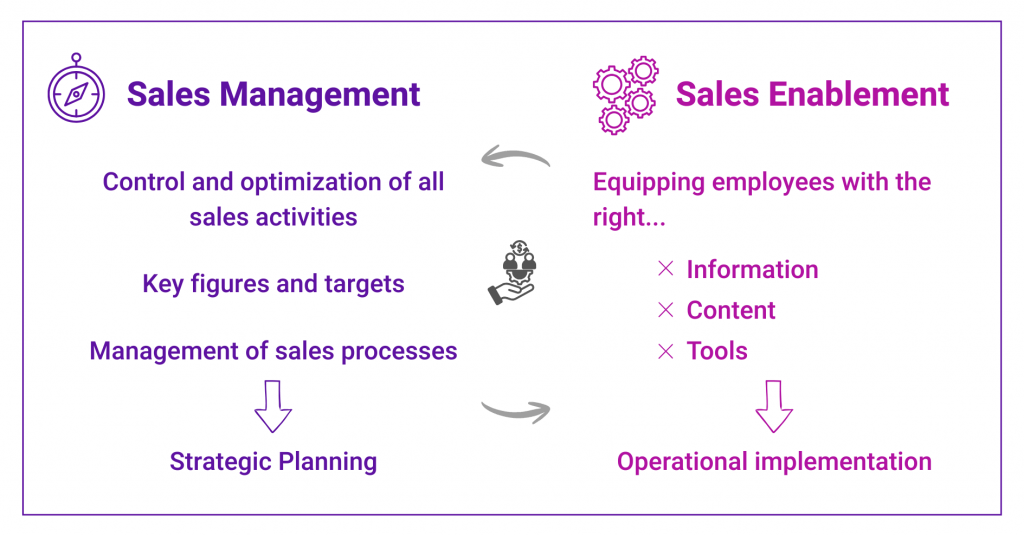
An intelligent content hub combines both aspects: It supports both strategic sales management through better processes and structures and sales enablement through the provision of relevant content at the right moment for up-to-date and correct use.
How an intelligent content hub is revolutionizing sales management
A modern content hub goes far beyond simple document management. It becomes the central nervous system of efficient sales management and optimizes sales processes on several levels:
1. Central presentation library – overview instead of search chaos
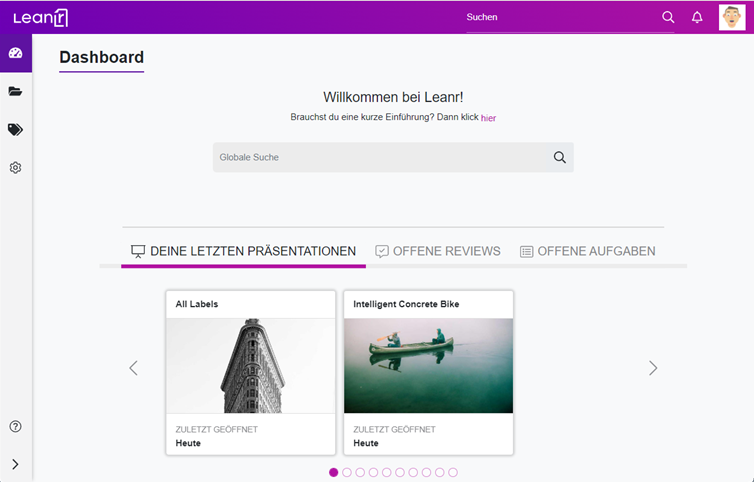
In a well-structured presentation library, all sales content is organized in one place. You can filter by labels or topics, use a clear folder structure and prioritize important files. You can see the status, creation date and last changes at a glance – long searches are a thing of the past.
2. Modular system – put presentations together quickly
With a modular approach, sales staff can quickly create customized presentations from existing slides. An intelligent search function finds relevant content by product or industry in seconds. The result: an efficient workflow instead of time-consuming searching – a core aspect of modern sales management. These elements can be put together centrally as templates using a modern software solution and these can then be provided with clear usage specifications according to the sales requirements situation. In this way, we can create up-to-date, individual presentations with correct content in just a few clicks.
3. Global search – all information immediately available
The comprehensive search function searches all content for specific terms and delivers all matching presentations and slides. This means you have all the information you need for your customer meeting without time-consuming research – a key aspect of effective sales enablement.
Advantages of an intelligent content hub
- Time saving: sales staff can concentrate on customer meetings instead of creating presentations
- Consistent communication: Uniform brand messages and sales management, even for dedicated teams, thanks to access to up-to-date, approved content and clear usage guidelines associated with the template
- Better collaboration: marketing and sales work together seamlessly thanks to clear, intuitive process guidance on the software interface
- Faster onboarding: New employees have immediate access to tried-and-tested materials and shorten their induction period
How much can you actually save? Use our ROI calculator and find out what efficiency gains a content hub would mean for your company in particular:
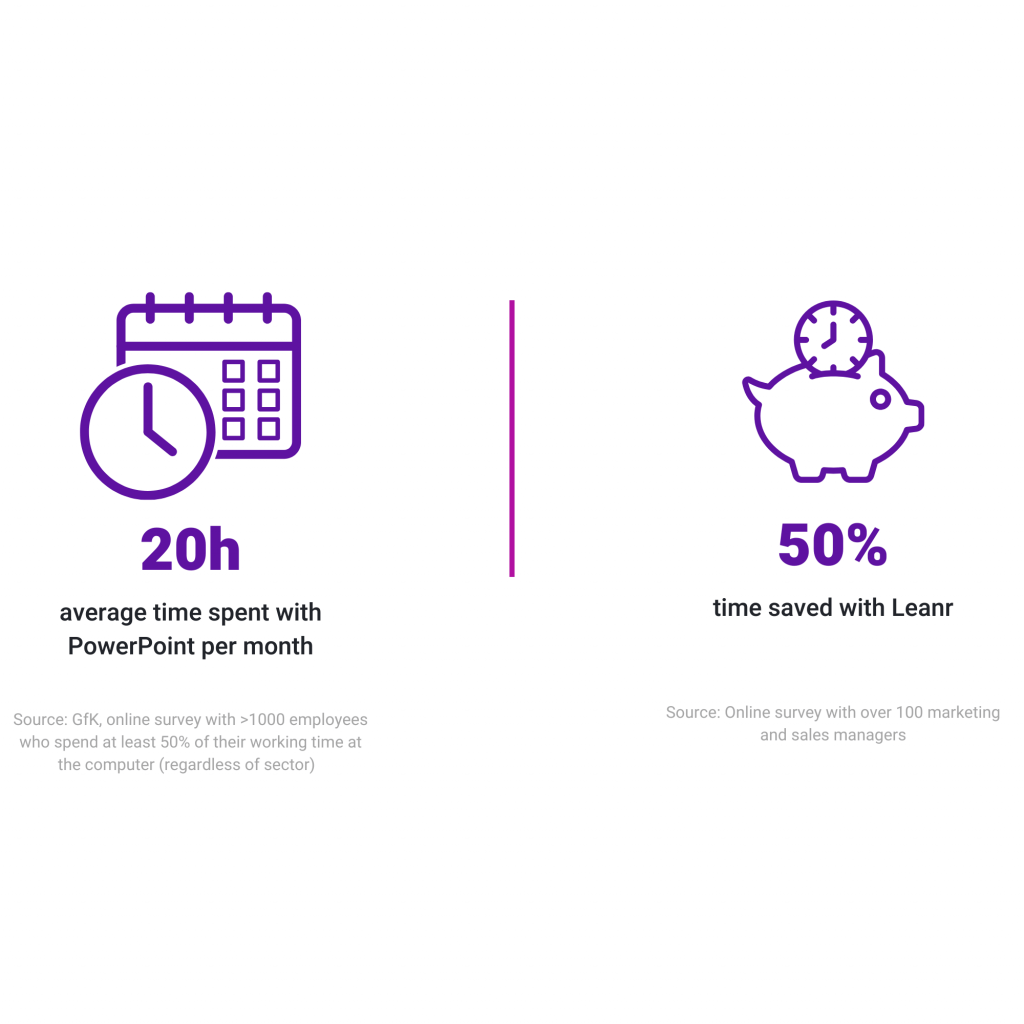
Result incl. Non-wage labor costs The license costs relate to the number of users on which the calculation is based in each case
The path to optimized sales management with a content hub
The implementation of an intelligent content hub is a structured process:
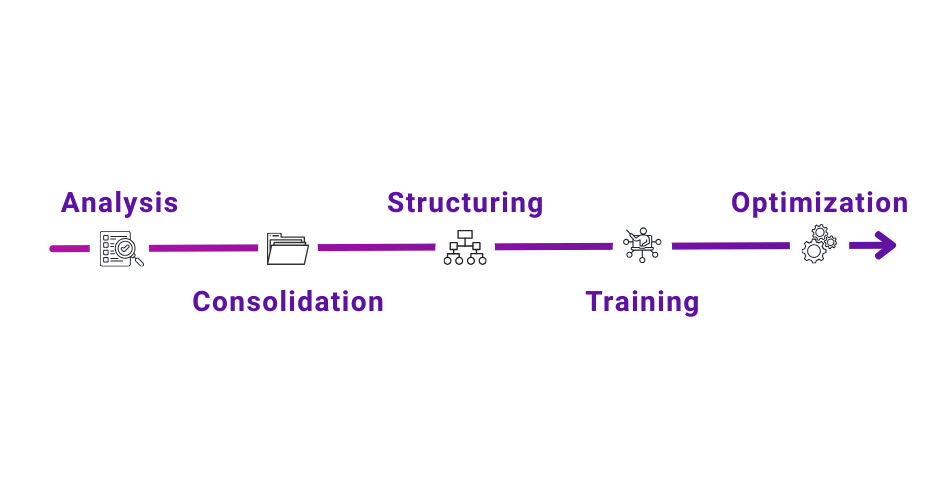
- Analysis of existing sales processes: Identification of inefficiencies and optimization potential in current sales management.
- Consolidation of sales content: Consolidation of all relevant documents, presentations and materials in a central library.
- Structuring and categorization: Creation of an intuitive content and usage structure that meets the needs of sales.
- Training and onboarding: Introduction of sales employees to the new platform and the optimized sales processes.
- Continuous optimization: Regular review and improvement of content and processes for ever more efficient sales management.
Conclusion: The content hub as the key to sales excellence
Efficiency in presentation management is not a luxury, but a necessity – especially for sales teams who often have to respond to a wide range of customer requirements at short notice. An intelligent content hub offers the solution to these challenges:
- Central presentation library for structured access to all content
- Modular system for quick and flexible compilation of presentations
- Global search to find all relevant information at any time
These functions create the basis for digital collaboration that gives you full control and maximum efficiency in your sales management. Forget time-consuming processes and design your presentations in less than two minutes – without having to open PowerPoint.
The results speak for themselves: sales staff spend less time searching for and creating content and more time in direct contact with customers. Presentations become more relevant and convincing. And sales processes become more efficient and structured.
Want to learn more about how an intelligent content hub can transform your sales processes? Download our sales whitepaper and discover how modern technologies can take your sales management to the next level.